
Subclass 309 (Offshore Partner Visa Australia)
If you are outside Australia and want to join your partner here permanently, the Subclass 309 is your starting point. It is the first stage of the offshore spouse visa pathway in Australia, and it allows you to travel to and live in Australia once granted, before progressing to the permanent Subclass 100 stage.
Our registered migration agents assess your eligibility, advise on the appropriate evidence, and prepare a decision-ready application for the Department of Home Affairs from day one.


The Subclass 309 is a temporary partner visa for applicants who are outside Australia at the time of lodgement. It is the first stage of the offshore spouse visa pathway under the Migration Act 1958 (Cth).
You lodge one combined application covering both the Subclass 309 (temporary) and Subclass 100 (permanent) visas. The Department assesses the temporary Subclass 309 first. Once granted, you can travel to Australia and live, work, and study here. The permanent Subclass 100 stage is generally considered around two years after your original application was lodged.
Unlike the onshore pathway, no bridging visa is issued when you lodge. You remain outside Australia until the Subclass 309 is granted. You do not have a visa nor Australian work rights during this waiting period.
You must be outside Australia when you lodge the application but can be either onshore or offshore when the Subclass 309 is granted.
The applicant must:
- Be outside Australia at the time of lodgement
- Be the spouse or de facto partner of an eligible sponsor
- Be in a genuine, exclusive, and continuing relationship
- Meet the health requirements set by the Department of Home Affairs
- Meet the character requirements set by the Department of Home Affairs
- Have no outstanding debts to the Australian Government
The sponsor must:
- Be an Australian citizen, permanent resident, or eligible New Zealand citizen
- Be at least 18 years of age
- Meet character requirements
- Not have sponsored more than two partner visa applicants in their lifetime, with a minimum five-year period between sponsorships
- Not be subject to a sponsorship ban under the Migration Regulations 1994 (Cth)
De facto applicants: The relationship must have existed for at least 12 months before the application is lodged. Exceptions apply if the couple has a dependent child together, or if the relationship is registered with an Australian state or territory authority. Registration is available in New South Wales, Victoria, Queensland, South Australia, Tasmania, and the ACT. It is not available in Western Australia or the Northern Territory.
Double grant: In limited circumstances, the Department may grant both the Subclass 309 and the Subclass 100 at the same time, without the standard two-year wait. This applies where the couple have been in a relationship for three or more years at the time of lodgement, or should they have a dependent child together, two or more years together at the time of lodgement. This is not automatic and depends on individual circumstances and the strength of the evidence.
Government Application Charge
The government application charge for the combined Subclass 309/100 spouse visa application is AUD $11,710 for the primary applicant in the 2026–27 financial year. This charge covers both stages, is paid once at lodgement, and is not refunded if the application is refused.
Additional costs include health examinations, police clearances from relevant countries, document translation where required, and biometrics where applicable.
Please note: Government visa application charges are reviewed and typically adjusted by the Department of Home Affairs each July. The figures above reflect the 2026–27 financial year. If you are reading this page after 1 July 2027, some charges may have changed. We recommend confirming current fees at the Department of Home Affairs visa pricing estimator or contacting us directly before you budget for your application.
Professional Fees
Our registered migration agents charge a professional fee for preparing and managing your spouse visa application. This is separate from the government application charge. Our fees are confirmed in full before you commit to anything, and we offer flexible payment plans to help you manage the cost of your application.
Based on data published by the Department of Home Affairs in early 2026:
- 50% of Subclass 309 applications are decided within approximately 14 to 18 months
- 90% are decided within approximately 22 to 26 months
The offshore spouse visa pathway generally takes longer to process at the temporary stage than the onshore pathway. The single most effective way to reduce processing time is lodging a decision-ready application from the outset. Incomplete files and inconsistent evidence are the most common causes of delay.
For the most current processing time estimates, visit the Department of Home Affairs Global visa processing times page.
Please note: Processing times are published by the Department of Home Affairs as percentile estimates and are updated monthly. The figures above reflect data available in early 2026. Actual processing times vary depending on the complexity of the application, the completeness of evidence provided at lodgement, and application volumes at the time of decision. These figures are a guide only and are not a guarantee of when your application will be decided.

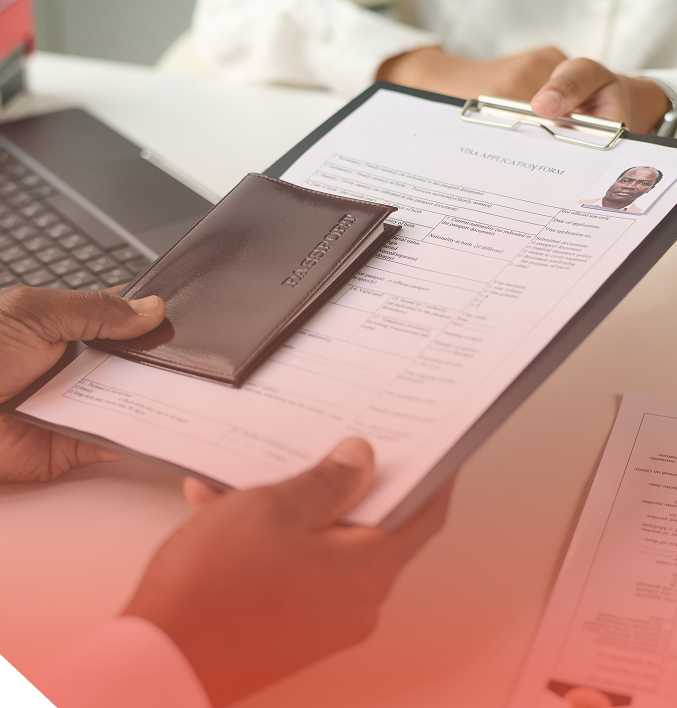


We handle your ImmiAccount lodgement and your sponsor's sponsorship application together, correctly, from the start.
We manage all correspondence with the Department of Home Affairs from lodgement through to the Subclass 309 grant, including any requests for further information.
When your Subclass 100 eligibility date approaches, we prepare your permanent spouse visa submission.
Explore Other Partner Visa Services

Onshore Partner
Visa Pathways
For couples where the applicant is in Australia at the time of lodgement.
Subclass 820
Temporary Partner Visa
Learn More

Subclass 801
Permanent Partner Visa
Learn More

OFfshore Partner
Visa Pathways
For couples where the applicant is outside Australia at the time of lodgement.
Subclass 309
Temporary Partner Visa
Learn More
Subclass 100
Permanent Partner Visa
Learn More

Prospective
Marriage Visa
For engaged couples where the applicant is outside Australia.
Subclass 300
Prospective Marriage Visa
Learn More

Additional Partner Visa Services
For LGBTIQ+ applicants, family violence matters, and partner visa refusals.
Family Violence
Partner Visa Provisions
Learn More
Refusals
Merits Review
Learn More
LGBTIQ+
Partner Visa
Learn More
Spouse Visa News and Updates
Financial, household, social, and commitment. Every category matters. Here is what a decision-ready evidence file looks like across all four.

Most Australians search for a spouse visa. Here is what it's actually called, which subclass applies to you, and how to apply.

Not married but in a genuine relationship? The partner visa pathway is open to you. Here is what the Department looks for in a de facto application.

One application covers both stages. Here is how the temporary and permanent stages work and what changes between them.
Most de facto couples must meet a 12-month requirement before lodging. Here is what counts, what does not, and when exceptions apply.

A refused partner visa application is not necessarily the end. Here is what merits review involves and what you need to know before you apply.
Processing time estimates are updated monthly. Here is what the latest Department data means for onshore and offshore applicants right now.

Explore More Articles

What Is the Difference and Why Does It Matter?
One application covers both stages. Here is how the temporary and permanent stages work and what changes between them.

What the 12-Month Rule Actually Means
Most de facto couples must meet a 12-month requirement before lodging. Here is what counts, what does not, and when exceptions apply.

What Are Your Options at the Administrative Review Tribunal?
A refused partner visa application is not necessarily the end. Here is what merits review involves and what you need to know before you apply.
What the 2026 Data Shows
Processing time estimates are updated monthly. Here is what the latest Department data means for onshore and offshore applicants right now.
Frequently Asked Questions
Do I have to be outside Australia to apply for the Subclass 309?
Yes. The Subclass 309 is the offshore spouse visa pathway. You must be outside Australia at lodgement. If you are in Australia, the onshore pathway (Subclass 820/801) applies.
Will I receive a bridging visa when I lodge?
No. Unlike onshore applicants, offshore applicants do not receive a bridging visa. You remain outside Australia until the Subclass 309 is granted.
Can I work in Australia while my application is being processed?
Not until the Subclass 309 is granted. You do not have Australian work rights during the offshore processing period as you have no visa granted. Full work rights commence once the Subclass 309 is granted.
Can I visit Australia while I am waiting for the Subclass 309?
You may apply for a visitor visa to visit Australia during the processing period. Any visit must be consistent with the conditions of the visitor visa you hold.
What happens once the Subclass 309 is granted?
You can travel to and live in Australia. The Subclass 309 allows you to live, work, and study in Australia, travel in and out freely, and enrol in Medicare while the permanent stage is assessed.
What is the difference between the Subclass 309 and the Subclass 100?
The Subclass 309 is the temporary stage of the offshore pathway. The Subclass 100 is the permanent stage. Both are applied for together in one combined application. The Subclass 100 is assessed roughly two years after the original lodgement date, provided the relationship remains genuine and continuing.
What if my relationship ends during processing?
You are required to notify the Department of Home Affairs of any changes in your relationship circumstances. If your sponsor withdraws their sponsorship, your application will generally not proceed. Family violence provisions under Australian migration law may apply in certain circumstances.
Can same-sex couples apply for the Subclass 309?
Yes. The Subclass 309 applies equally to same-sex and opposite-sex couples. The eligibility criteria, evidence requirements, and assessment process are identical regardless of gender or sexual orientation.

Trusted Australian migration experts helping individuals and families build their future in Australia.

Phone
1300 372 999


Address
24 Railway Crescent Broadmeadows, VIC 3047

MARA
Migration AgentMARN: 1175724