
LGBTIQ+ (Partner Visa Australia)
Same-sex and gender-diverse couples have the same rights under Australian migration law as all other couples. The partner visa, what many people call the spouse visa, applies equally to LGBTIQ+ couples across every subclass and every stage of the process.
Our registered migration agents handle LGBTIQ+ partner visa applications with the same rigour and care as every application we prepare. The pathway is the same. The evidence requirements are the same. The outcome, permanent residency in Australia, is the same.


There is no separate LGBTIQ+ visa in the Australian migration system. Same-sex and gender-diverse couples apply for the partner visa through exactly the same subclasses as all other couples under the Migration Act 1958 (Cth).
Since 9 December 2017, when the Marriage Amendment (Definition and Religious Freedoms) Act 2017 came into effect, same-sex marriage has been fully recognised under Australian law. The Marriage Act 1961 (Cth) now defines marriage as "the union of 2 people," regardless of gender. The Migration Act 1958 (Cth) Section 5F defines a spouse as a person in a same-sex or different-sex relationship equally.
This means same-sex married couples can apply for the partner visa as married spouses, not just as de facto partners. Overseas same-sex marriages are also recognised under Australian law, provided they were valid under the law of the country where they took place.
The eligibility requirements for LGBTIQ+ couples are identical to those for all other couples under the Migration Act 1958 (Cth) and the Migration Regulations 1994 (Cth). The Department of Home Affairs does not apply different standards based on sexual orientation or gender identity.
The applicant must:
- Be in a genuine and continuing relationship with an eligible sponsor
- Be married to or in a de facto relationship with the sponsor, or engaged and intending to marry
- Meet health and character requirements, including police clearances from every country lived in for 12 or more months since turning 16
- Have no outstanding debts to the Australian Government
- Meet the location requirements for the relevant subclass at lodgement
The sponsor must:
- Be an Australian citizen, permanent resident, or eligible New Zealand citizen
- Be at least 18 years of age
- Meet character requirements
- Not have sponsored more than two partner visa applicants in their lifetime, with a minimum five-year period between sponsorships
- Not be subject to a sponsorship ban under the Migration Regulations 1994 (Cth)
A note on overseas same-sex marriages: Same-sex marriages that took place overseas before 9 December 2017 are recognised under Australian law provided they were valid under the law of the country where they took place. If your marriage was validly conducted overseas, you may apply as a married couple and the 12-month de facto cohabitation requirement does not apply.
A note on relationship registration: For de facto couples, the 12-month requirement does not apply if the relationship is registered with an Australian state or territory authority. Registration is available in New South Wales, Victoria, Queensland, South Australia, Tasmania, and the ACT. It is not available in Western Australia or the Northern Territory.
Government Application Charge
The government application charges for LGBTIQ+ partner visa applications are identical to those for all other partner visa applicants. The combined charge for the Subclass 820/801 or 309/100 application is AUD $11,710 for the primary applicant in the 2026–27 financial year. For the Subclass 300 Prospective Marriage Visa, the charge is AUD $11,710 for the primary applicant.
These charges are paid once at lodgement and are not refunded if the application is refused.
Additional costs include health examinations, police clearances from relevant countries, document translation where required, and biometrics where applicable.
Please note: Government visa application charges are reviewed and typically adjusted by the Department of Home Affairs each July. The figures above reflect the 2026–27 financial year. If you are reading this page after 1 July 2027, some charges may have changed. We recommend confirming current fees at the Department of Home Affairs visa pricing estimator or contacting us directly before you budget for your application.
Professional Fees
Our registered migration agents charge a professional fee for preparing and managing your spouse visa application. This is separate from the government application charge. Our fees are confirmed in full before you commit to anything, and we offer flexible payment plans to help you manage the cost of your application.
Processing times vary depending on the subclass, the completeness of the application at lodgement, and the Department's current caseload. For current processing time estimates by subclass, see the individual service pages for the Subclass 820, Subclass 309, and Subclass 300.
The single most effective way to reduce processing time for any spouse visa application is lodging a decision-ready application from the outset.
For the most current processing time estimates, visit the Department of Home Affairs Global visa processing times page.
Please note: Processing times are published by the Department of Home Affairs as percentile estimates and are updated monthly. Actual processing times vary depending on the complexity of the application, the completeness of evidence provided at lodgement, and application volumes at the time of decision. These figures are a guide only and are not a guarantee of when your application will be decided.
.jpg)
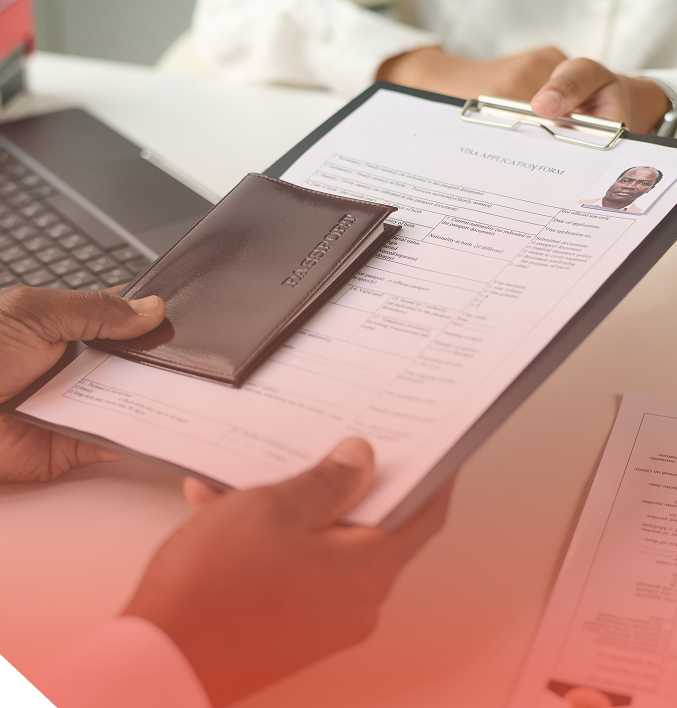


We handle your ImmiAccount lodgement and your sponsor's sponsorship application together, correctly, from the start.
We manage all correspondence with the Department of Home Affairs from lodgement through to the final decision, including any requests for further information.
When your permanent spouse visa eligibility date approaches, we can also prepare your Stage 2 submission.
Explore Other Partner Visa Services

Onshore Partner
Visa Pathways
For couples where the applicant is in Australia at the time of lodgement.
Subclass 820
Temporary Partner Visa
Learn More

Subclass 801
Permanent Partner Visa
Learn More

OFfshore Partner
Visa Pathways
For couples where the applicant is outside Australia at the time of lodgement.
Subclass 309
Temporary Partner Visa
Learn More
Subclass 100
Permanent Partner Visa
Learn More

Prospective
Marriage Visa
For engaged couples where the applicant is outside Australia.
Subclass 300
Prospective Marriage Visa
Learn More

Additional Partner Visa Services
For LGBTIQ+ applicants, family violence matters, and partner visa refusals.
Family Violence
Partner Visa Provisions
Learn More
Refusals
Merits Review
Learn More
LGBTIQ+
Partner Visa
Learn More
Spouse Visa News and Updates
Financial, household, social, and commitment. Every category matters. Here is what a decision-ready evidence file looks like across all four.

Most Australians search for a spouse visa. Here is what it's actually called, which subclass applies to you, and how to apply.

Not married but in a genuine relationship? The partner visa pathway is open to you. Here is what the Department looks for in a de facto application.

One application covers both stages. Here is how the temporary and permanent stages work and what changes between them.
Most de facto couples must meet a 12-month requirement before lodging. Here is what counts, what does not, and when exceptions apply.

A refused partner visa application is not necessarily the end. Here is what merits review involves and what you need to know before you apply.
Processing time estimates are updated monthly. Here is what the latest Department data means for onshore and offshore applicants right now.

Explore More Articles

What Is the Difference and Why Does It Matter?
One application covers both stages. Here is how the temporary and permanent stages work and what changes between them.

What the 12-Month Rule Actually Means
Most de facto couples must meet a 12-month requirement before lodging. Here is what counts, what does not, and when exceptions apply.

What Are Your Options at the Administrative Review Tribunal?
A refused partner visa application is not necessarily the end. Here is what merits review involves and what you need to know before you apply.
What the 2026 Data Shows
Processing time estimates are updated monthly. Here is what the latest Department data means for onshore and offshore applicants right now.
Frequently Asked Questions
Is there a separate partner visa for same-sex couples in Australia?
No. LGBTIQ+ couples apply for the same partner visa subclasses as all other couples under the Migration Act 1958 (Cth). The eligibility criteria, evidence requirements, fees, and assessment process are identical regardless of sexual orientation or gender identity.
When did Australia recognise same-sex marriage for migration purposes?
Same-sex marriage has been fully recognised under Australian law since 9 December 2017, when the Marriage Amendment (Definition and Religious Freedoms) Act 2017 came into effect. The Migration Act 1958 (Cth) Section 5F now recognises a spouse as a person in a same-sex or different-sex relationship equally.
We were married overseas before December 2017. Is our marriage recognised?
Yes. Overseas same-sex marriages are recognised under Australian law from 9 December 2017, provided they were valid under the law of the country where they took place. You may apply as a married couple and the 12-month de facto cohabitation requirement does not apply.
Do same-sex de facto couples need to meet the 12-month requirement?
Yes, in most cases. The 12-month de facto cohabitation requirement applies to same-sex de facto couples in the same way it applies to all de facto couples. Exceptions apply if the couple has a dependent child together, or if the relationship is registered with an Australian state or territory authority.
Can same-sex engaged couples apply for the Subclass 300 Prospective Marriage Visa?
Yes. The Subclass 300 is fully available to same-sex engaged couples since marriage equality became law in December 2017. The applicant must be outside Australia at the time of lodgement.
Does the Department of Home Affairs treat LGBTIQ+ applications differently?
No. The Department assesses every application on the quality and consistency of the evidence file. The assessment criteria, the four relationship categories, and the decision-making framework are identical for all couples regardless of gender or sexual orientation.
What if social recognition of our relationship is difficult to document?
Some LGBTIQ+ couples face specific challenges in documenting social recognition, particularly where family acceptance or community recognition is complex. Our registered migration agents work with you to present the evidence you have in the most effective way and to identify other evidence that supports your application.

Trusted Australian migration experts helping individuals and families build their future in Australia.

Phone
1300 372 999


Address
24 Railway Crescent Broadmeadows, VIC 3047

MARA
Migration AgentMARN: 1175724